Jada + David are mixed media artists whose work explores the connection between painting, sculpture, motion, and photography.
There comes a point in some creative careers where you realise you’ve become very good at making things that no longer excite you.
For Jada + David Parrish, that moment arrived after nearly a decade photographing weddings. They were good at it too. Busy calendars. Constant bookings. Beautiful images. But after years of shooting hundreds of weddings, something started to feel off.
“We realised we were showing up on autopilot,” they told us. “We knew how to make beautiful images, but we felt completely disconnected from what we were creating.”
Then came 2020.
Almost overnight, the weddings disappeared. For the first time in years, there was space to stop, breathe, and ask the question they'd been avoiding.
"Do we actually want to keep doing this?"
The answer surprised them with how clear it was.
“No.”
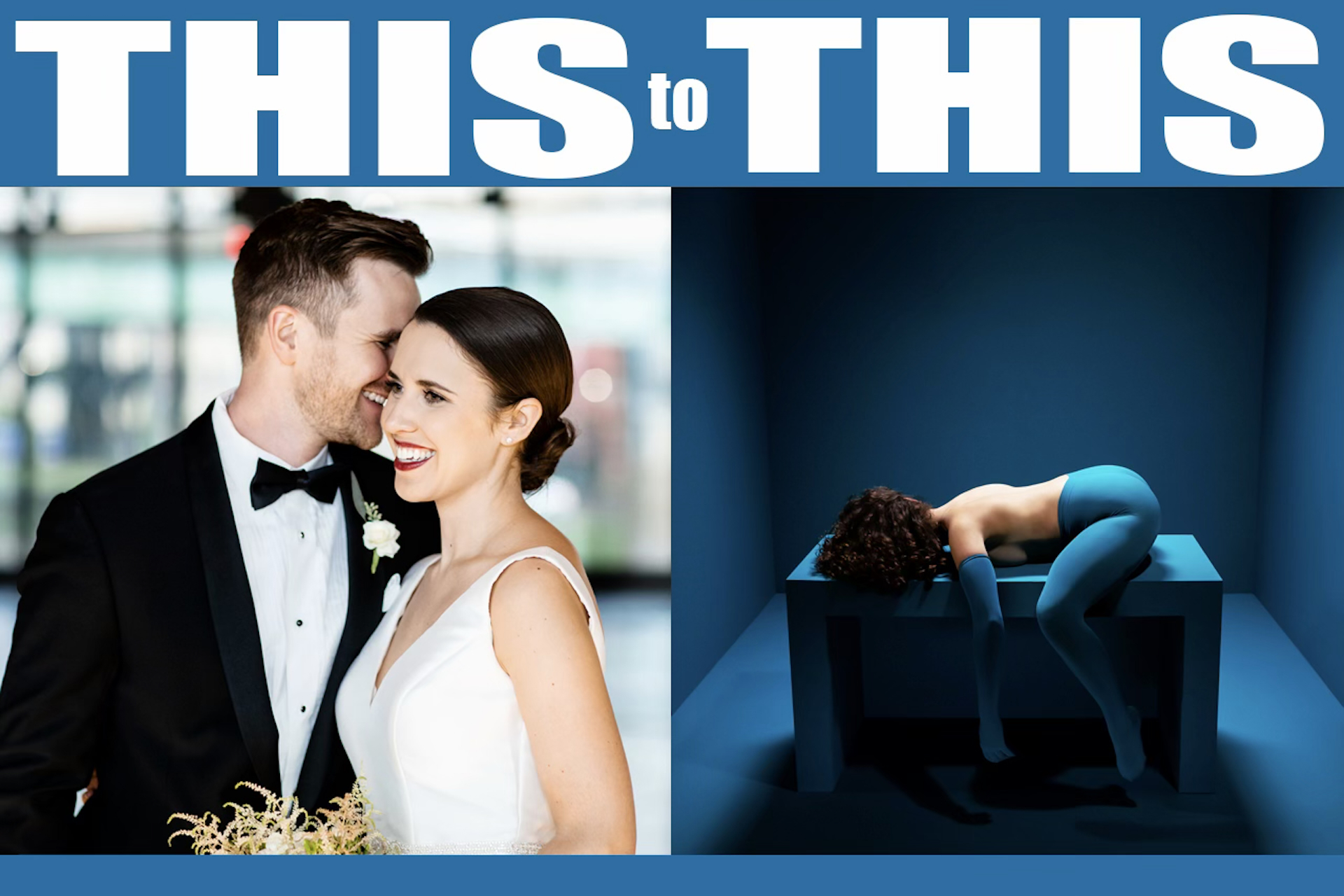
For nearly a decade, Jada + David photographed weddings.
Then they asked themselves a difficult question: Do we still love what we're creating?
The answer changed everything.
What followed wasn’t some polished reinvention story. It was messy, exhausting, exciting, and at times completely unsustainable.
They threw themselves into what became the 100 Set Project: building and photographing 100 original environments in a single year. Everything was made physically by hand using plywood, paint, lighting, props, thrifted clothing, and whatever esle they could find.
Most days started with coffee and art books. A loose idea would emerge, Then came the scramble to make it real.
They’d pull apart old sets to reuse materials, rush out for paint or props, build walls, style wardrobes, light the scene, and somehow have everything ready before the model arrived later that evening. Many of the works were conceptualised, built, and photographed all within the same day.
Somewhere in the middle of all that chaos, the work began to change. The lack of time forced them to stop overthinking and start trusting instinct instead.
“We stopped thinking like photographers documenting something that already existed,” they said. “We started thinking like artists creating something from nothing.”
That shift sits at the heart of Surreal Spaces, the series coming soon to Addicted Art Gallery.
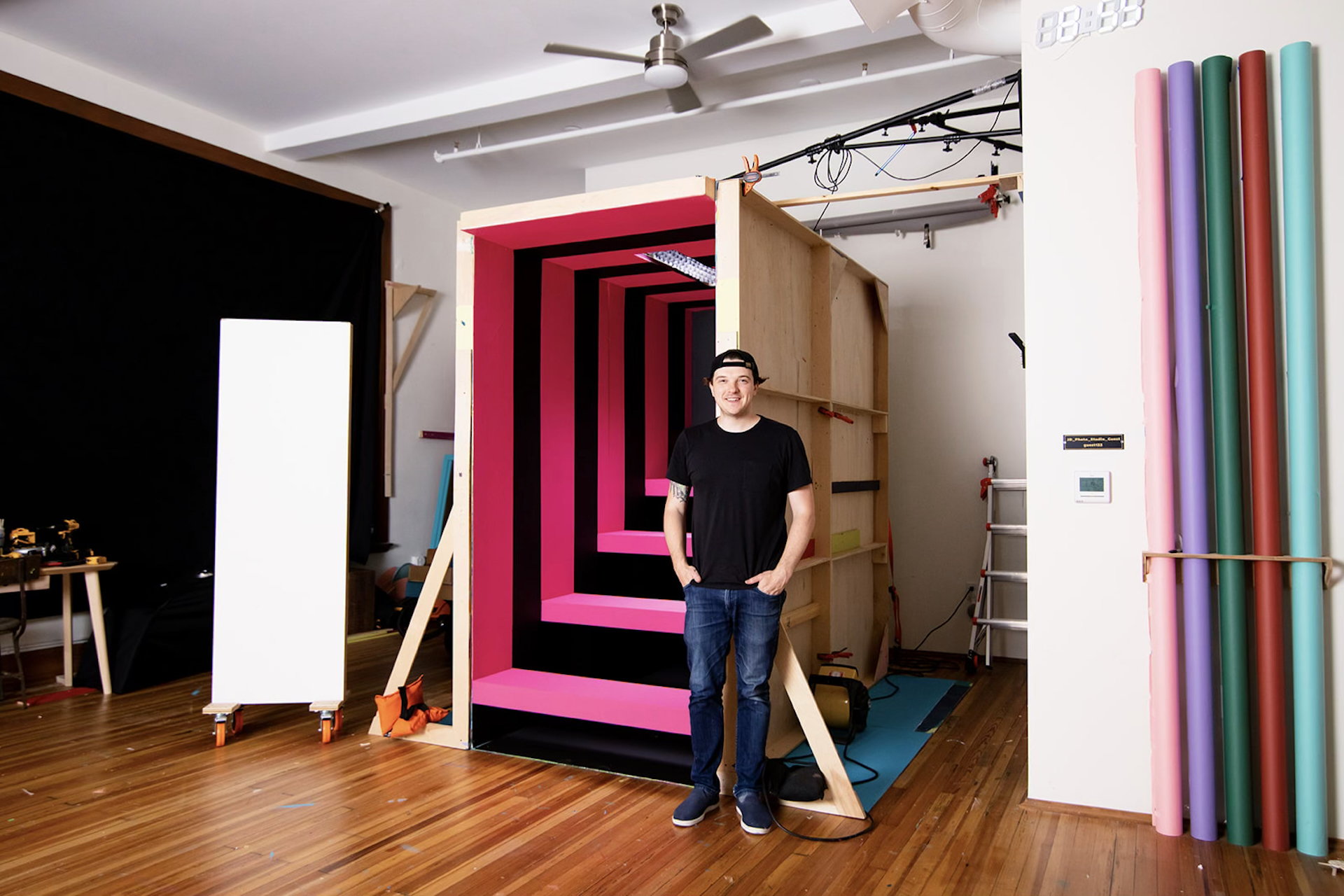
Before the image, there was the room.
The hand-built set for FOMO, created during Jada + David's ambitious 100 Set Project.
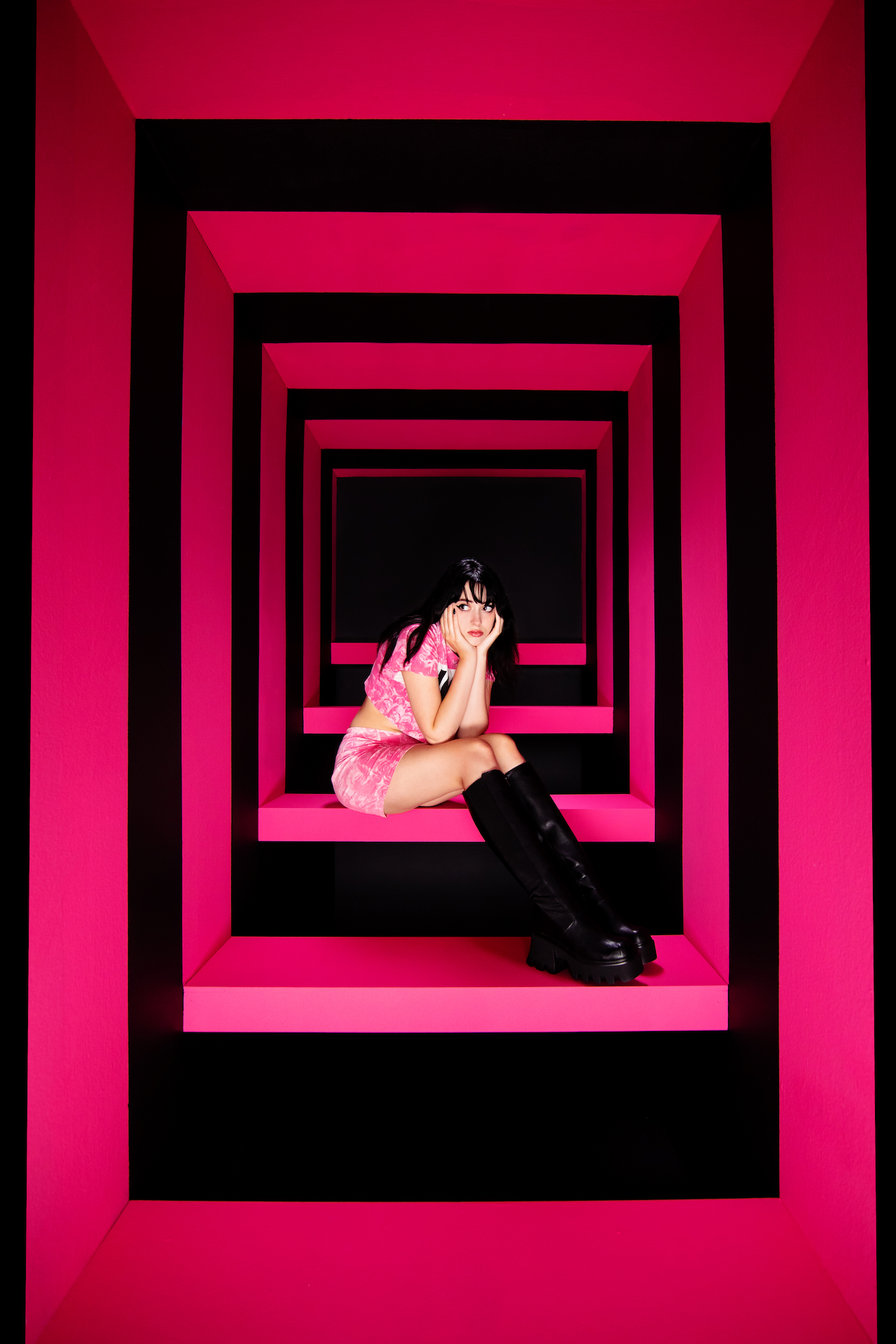
The final image | FOMO (2021) from the Surreal Spaces series.
The works feel cinematic, but not in a polished Hollywood kind of way. They feel stranger than that. More intimate. More psychologically charged. Rooms bend. Colours vibrate. Perspectives distort. The images feel controlled on the surface, but emotionally a little unsettled underneath.
That balance comes naturally from the way the pair work together.
David approaches the sets structurally. Geometry. Perspective. Precision. Jada works more instinctively, shaping the colour, styling, emotion, and posing inside the scene.
“I’m always drawn to poses that feel a little broken or doll-like,” Jada explains. “Not completely unnatural, but not fully comfortable either.”
One image in particular, Out of Space, almost collapsed under the weight of its own limitations. Built inside a tiny Los Angeles garage with unexpectedly low ceilings and very few tools, the original concept simply wasn’t working. Instead of fighting the space, they leaned into it.
The final image became tighter, more claustrophobic, and far more emotionally charged than what they had originally planned.
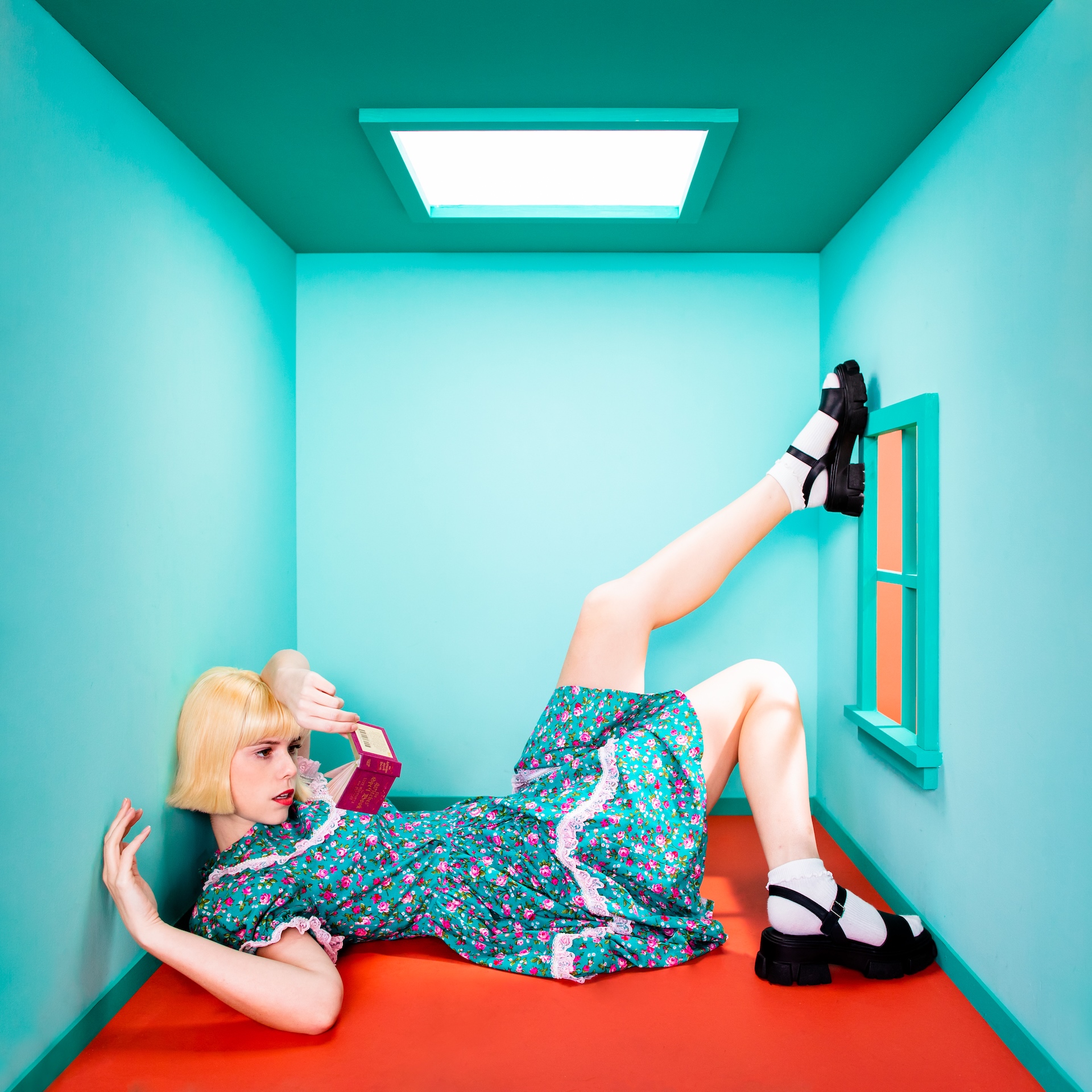
Out of Space (2021), an example of what Jada + David describe as “a build failing successfully,” where unexpected limitations ultimately strengthened the final work.
“It’s probably one of the clearest examples of a build failing successfully,” they said.
And despite how surreal the finished works appear, very little is achieved through digital manipulation.
Part of that comes from what inspired them in the first place. Both grew up watching cartoons and animated worlds where colours felt louder, shapes stranger, and emotions exaggerated beyond real life. You can still feel traces of that influence running through the work now.
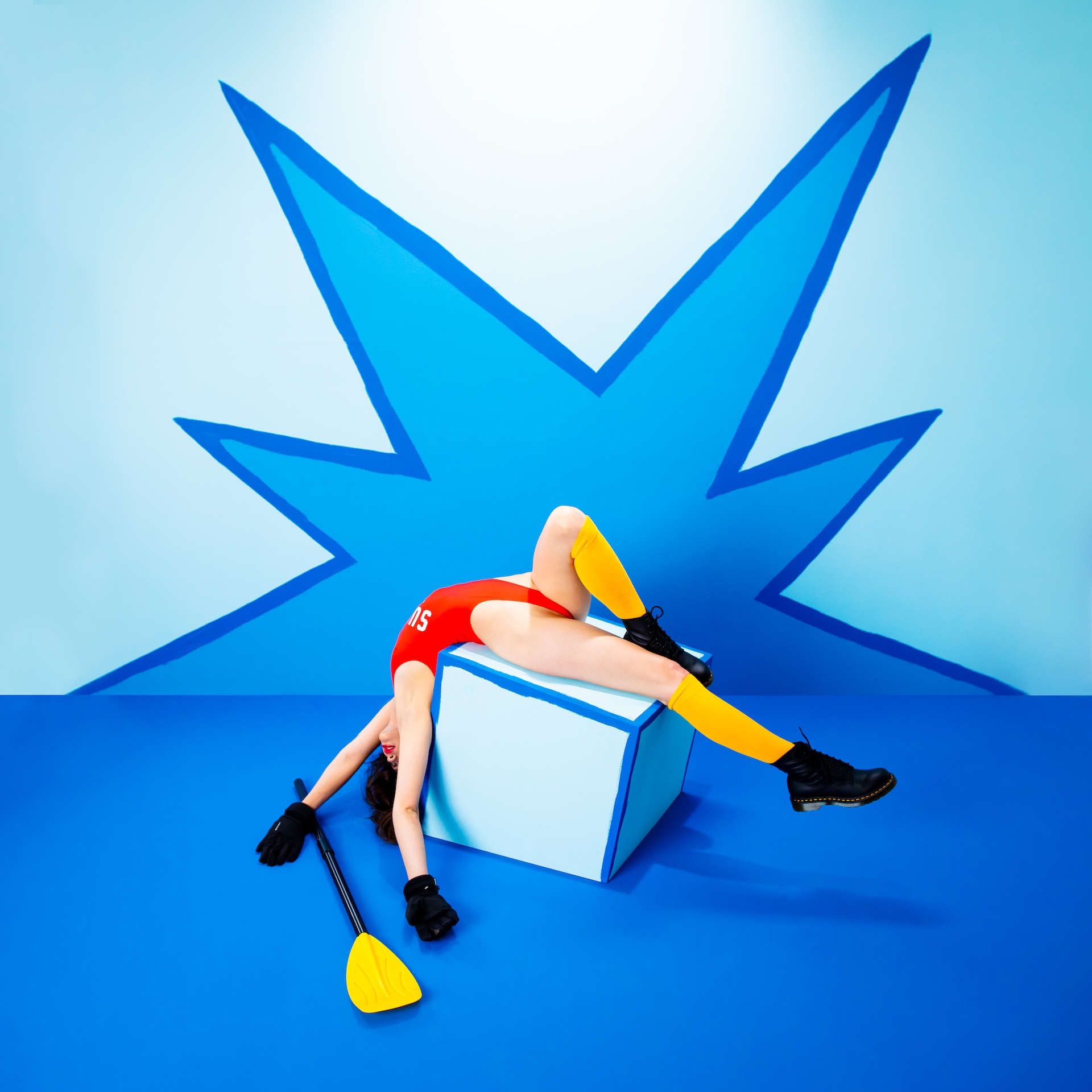
Splat (2021) | The influence of cartoons can still be felt throughout Jada + David's work, where bold colour, exaggerated forms, and imagined worlds collide.
“There’s something really satisfying about taking an idea that only existed as a sketch or passing thought and physically building it into a space someone can actually walk into and interact with,” they explain.
The subjects aren’t added into fantasy worlds later. They’re standing inside them. Leaning against walls. Climbing onto structures. Responding to the environment in real time.
The sets stop feeling like backgrounds and start feeling more like permission.
“Permission to play, to exaggerate emotion, to take up space differently, or to embody parts of themselves they normally keep hidden.”
Most of the sets only exist for a few hours before being dismantled and rebuilt into something entirely different. A single piece of plywood might quietly reappear across dozens of works, transformed each time into an entirely new world.
And maybe that’s what makes the series resonate beyond the visuals themselves.
At its core, Surreal Spaces is really about two people willing to make something before they had any proof it would work. Building elaborate worlds inside garages and studios because they couldn’t ignore the feeling pulling them toward something more meaningful.
Looking back now, Jada sees bravery more than certainty.
“We had no idea what we were making or where it was leading,” she says. “But we trusted the process before there was any proof it would work.”
In a world built on speed, algorithms, and endless scrolling, there’s something refreshing about work that asks people to slow down for a second. To sit with an image. To feel something before analysing it.
Something imagined. Then made real.
If you'd like a first look at Surreal Spaces before its official release, we'd be delighted to send you a preview catalogue.
Contact blair@addictedgallery.com or elena@addictedgallery.com to request your copy.