Buying art online shouldn’t feel like a gamble. But too often, it does. A polished website, a convincing backstory, and still the same question sits in the back of your mind: is this actually legit?
The reality is, the answer is usually there. You just need to know where to look.
Start with the basics. Who is the artist? Where did the work come from? Can the gallery stand behind it with something more than a paragraph of text? If those answers aren’t immediate and clear, that’s your first signal. Legitimate galleries don’t rely on aesthetics to carry the sale. They show you the substance.
That substance begins with provenance. Every artwork should come with a clear history of ownership, a Certificate of Authenticity, and supporting documentation where relevant. Not something that appears after the fact, and not something hidden behind vague assurances. If it’s real, it should be visible. If it’s not, you’re being asked to trust something that hasn’t earned it.
Condition is just as important, and it’s where a lot of online transactions quietly fall apart. Serious galleries don’t just list artworks, they understand how they’ve been cared for. That means proper storage, recent inspection, and the ability to speak clearly about the state of the work. Condition reports are provided on request prior to purchase, so there’s clarity before any decision is made. Condition isn’t a minor detail. It directly affects value, longevity, and ultimately whether what you’re buying will hold up over time.
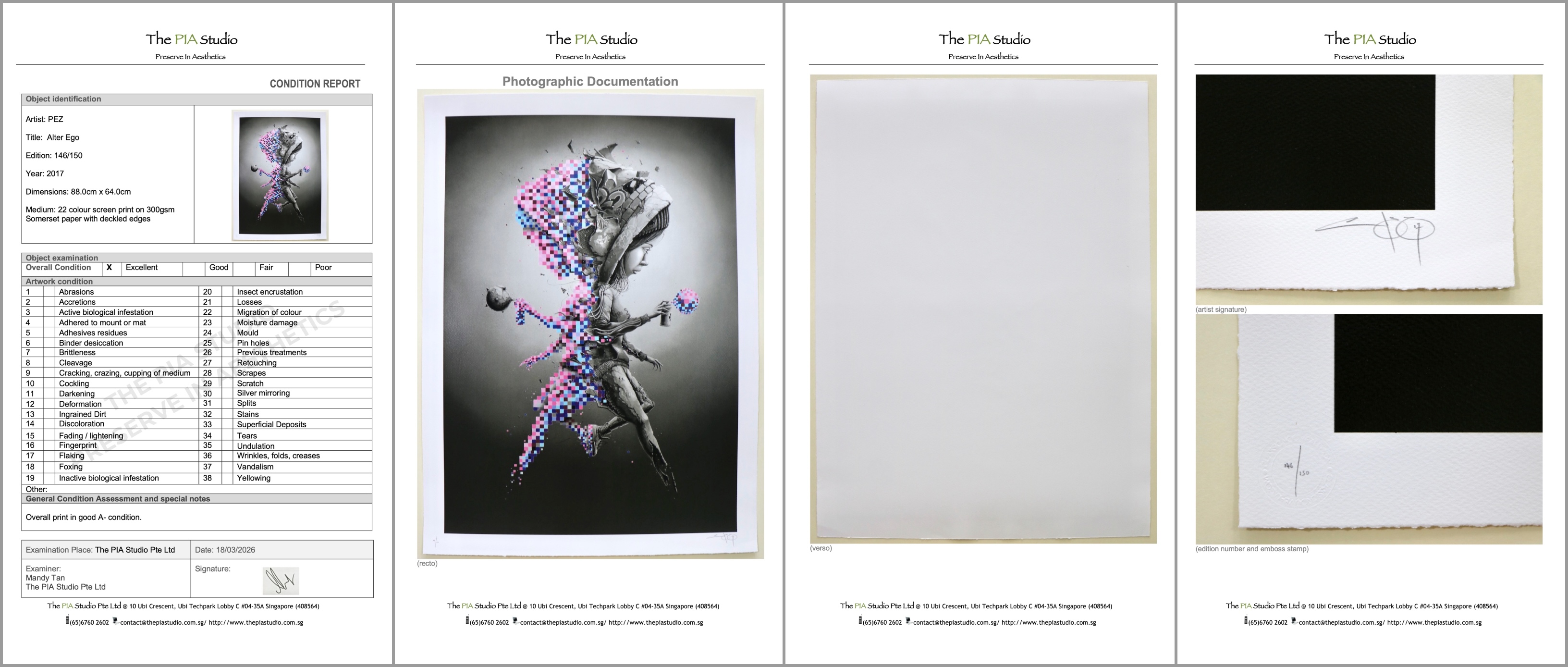
Every work in our portfolio undergoes a 39-point condition check with The PIA Studio in Singapore.
Surface, structure, framing. Nothing gets missed.
Everything is recorded, so collectors know exactly what they’re buying.
Because trust starts with transparency.
Access matters too. Even in an online model, there should be a clear pathway to physically inspect the work, or at the very least, understand exactly where and how it exists. Some of the artists we work with prefer to keep artworks in their own studios rather than shipping them internationally until a sale is confirmed. That’s not a shortcut. It’s a practical decision that avoids unnecessary handling and cost. What matters is transparency. We require images and video that show how the work is stored and handled, so there’s no ambiguity around its condition.
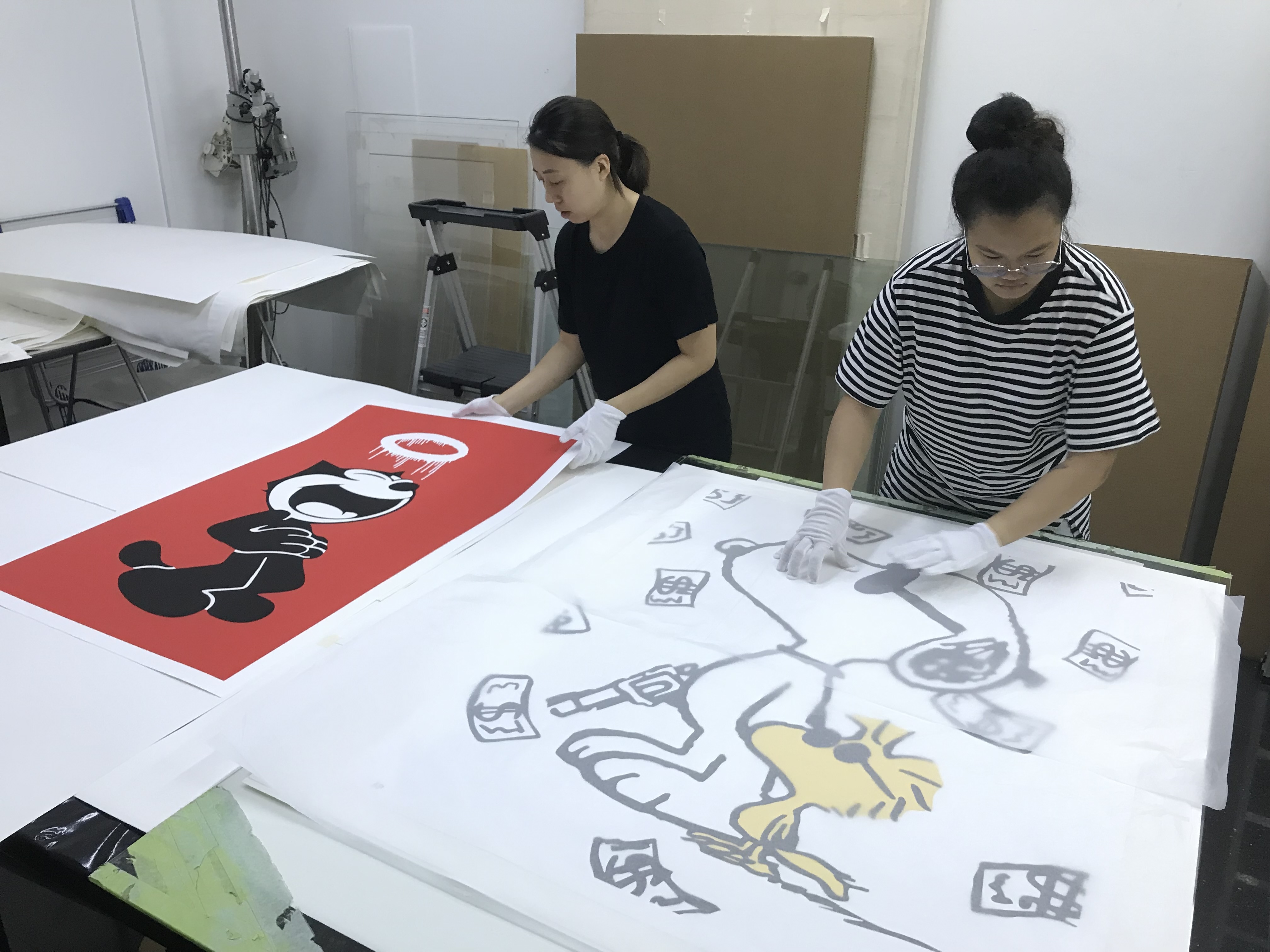
The PIA Studio team. Every artwork is handled with care.
The same thinking applies to limited edition prints. A number of the artists we work with produce editions that are printed to order, with quality control overseen directly by the artist. This approach isn’t about cutting corners. It’s about maintaining consistency while avoiding unnecessary production and storage costs. Each work remains part of a controlled edition, with materials, finish, and output carefully managed.
From a logistics perspective, the principle is simple. Every work we handle is fully documented at the point of shipment, regardless of where it is held. If a work is stored locally, that documentation sits alongside its condition and handling records. If it is held overseas, we ensure the artist can safely prepare it for transit, supported by clear documentation of how it is packed. From there, we coordinate shipping and insurance to ensure the work arrives exactly as it should. The process is controlled, documented, and transparent at every stage.
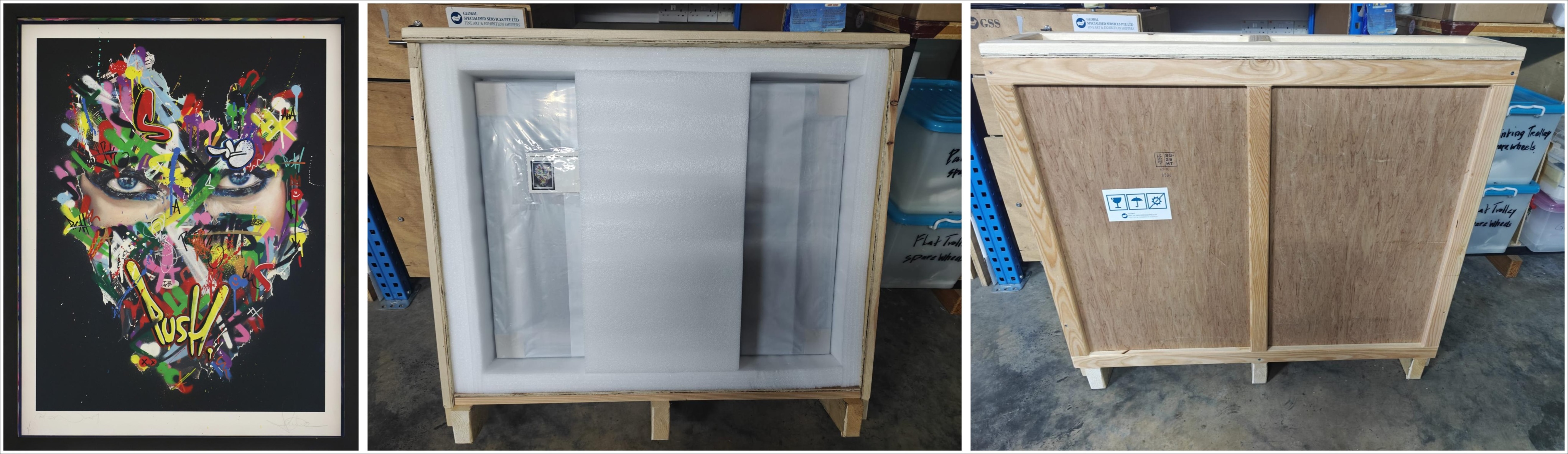
From packing to delivery, every step is documented and tracked.
One of the clearest red flags in the market is pressure. The language is familiar. Last chance. Multiple buyers interested. Price goes up tomorrow. A legitimate gallery gives you space to think because they expect you to come back. They’re building a relationship, not chasing a transaction.
At Addicted, we don’t maintain a traditional white cube space, and we choose not to participate in art fairs. In a market like Singapore, the cost of maintaining that kind of infrastructure doesn’t make commercial sense, particularly at the price points we operate in. Passing that cost onto collectors doesn’t make sense either. Instead, we present works through pop-up exhibitions when the right opportunity arises.
Instead, we focus on what actually matters. Every artwork is vetted. Provenance is clear. Condition is documented. Viewing can be arranged through our storage partners when required. Whether a work is held locally or overseas, the same standard applies. You don’t just see the artwork. You understand how it has been cared for.
Trust isn’t built on presentation. It’s built on substance.
If something feels unclear, it usually is. The best galleries don’t wait for you to ask the right questions. They answer them before you even need to.
Collecting isn’t about taking risks on whether something is real. It’s about making considered decisions, building relationships, and ultimately, connecting with the work in front of you.
And if that process feels human, clear, and grounded, you’re probably in the right place.